понедельник, 28 января 2013 г.

Rendering 16 Music


The history of rock music.

The headline of the article is "The History of Rock Music". The author of the article is Mihaela Schwartz. The article was published on the web site www.helium.com on May 04.2012. The article provides the information about the the foundations that laid by the rock and roll.
   In the beginning of the article the author states that people nowadays call rock is a musical genre that developed on the foundations laid by the rock and roll. The latter one has its roots in various styles of Afro-American music. When trying to trace the origins of rock music, we as back as the late 30s and to the big jazz bands of Count Basie and Jay Mc Shann. Their music, inspired by rhythm and blues, was afterwards popularized by black artists like Chuck Berry and Fats Domino, before being adopted by white singers such as Bill Haley and Elvis Presley.
   Mihaela also states in her article that the year 1954 featured by Bill Haley’s recording of “Around the Clock” (that remained number one in the U.S. for 8 weeks and went on to sell 20 million copies worldwide) is considered the official date when the rock music was born. The same year, Elvis Presley nicknamed The King issued one of earliest rock pieces – “That’s Alright Mama” – in which he introduced elements of country music. 
   The author in her article states that in the 60s, the rock music starts getting into Europe. The beginning of this decade is marked by several moves such as the first Rolling Stone’s concert in 1962 and the first hit of the notorious Beatles – Love Me Do. At the end of this decade, the sentimental words of rock songs give way to more committed texts, particularly under the influence of Bob Dylan - an artist whose work was influenced by the American folk.
  In conclusion the author gives us the information about this period that was also marked by major figures such as Jimi Hendrix, The Doors, The Who, Pink Floyd and Jefferson Airplane, all influenced by the hippie movement and by the emancipation events of the years 1968-1970 in the U.S. and Europe.
   In my opinion Mihaela is right to say that rock and roll music has some roots from the Afro-American culture. As for me I didn't know before this article about it.

воскресенье, 27 января 2013 г.

Rendering 15 Music

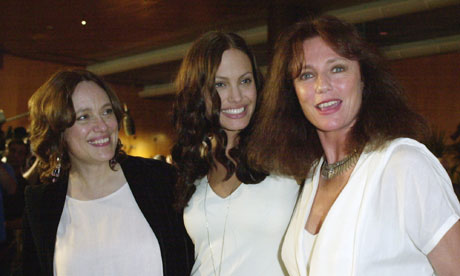
Angelina Jolie's aunt Debbie Martin dies of breast cancer


The headline of the article is "Angelina Jolie's Aunt Debbie Martin Dies of Breast Cancer". The author of the article is Sam Jones The article was published on the web site www.guardian.com on May 27.2013. The article provides the information about Angelina Jolie's aunt has died of breast cancer less than two weeks afterthe Hollywood actor revealed that she had undergone a double mastectomy to avoid the disease that killed her mother at 56.

In the beginning of the article the author states Debbie Martin, 61, died in a hospital in Escondido, near San Diego, California, according to her husband, Ron. She was the younger sister of Jolie's mother, Marcheline Bertrand, whose death from ovarian cancer in 2007 prompted the actor to have the surgery she described in a New York Times article this month.

Then Sam reports that Jolie revealed that she had a defective gene, BRCA1, which significantly increased her risk of developing breast and ovarian cancer. "Once I knew that this was my reality, I decided to be proactive and to minimise the risk," she wrote.

Anyway the author states that Ron Martin said his wife also carried the gene but had not been not aware of it until she was diagnosed with cancer in 2004. "Had we known, we certainly would have done exactly what Angelina did," he told Associated Press. Also the author states that Ron added that after developing breast cancer, his wife had her ovaries removed to minimise her chances of the disease returning.

The author adds that in the New York Times article, published on 14 May, Jolie explained how her mother's death had informed her decision to have surgery. "My mother fought cancer for almost a decade and died at 56," she wrote. "She held out long enough to meet the first of her grandchildren and to hold them in her arms. But my other children will never have the chance to know her and experience how loving and gracious she was."

In the very end of the article the author provides the information of Jolie's decision to share her experiences was widely praised. Wendy Watson, founder of the UK's National Hereditary Breast Cancer Helpline, said the article had helped to focus attention on the issue. "It is excellent, because it is the highest profile you can get for it," she said. "It raises the profile for other women to look to if they have a family history and would benefit from being screened more frequently, or having surgery or having a genetic test.

"She probably feels that undergoing the operation is common sense but it probably does take a certain amount of courage to face it."

In my opinion it is very sad because younger sister of Jolie's mother had defective gene but was not aware of it until cancer diagnosis in 2004.

суббота, 26 января 2013 г.

Rendering 14 Music


Stormy Weather Can Set the Stage for Sounds Both Old and New

‘The Baroque Vanguard,’ at the Miller Theater

   The author of the article is Anthony Tommasini. It was published on April 30, 2013 on the page of the New York Times. The article provides the information about the Miller Theater at Columbia University has long been a hot spot for adventurous programming. But in promoting “The Baroque Vanguard,” the second of three concerts in the theater’s “Bach, Revisited” series, which took place on Saturday night, the presenters may have overstated its novelty.
   In the beginning of the article the author reports that the program was fresh and pleasurable. The lively harpsichordist Kristian Bezuidenhoutjoined Ensemble Signal, the dynamic New York-based contemporary-music group, under its conductor Brad Lubman. Just a week earlier on the same stage the ensemble had played a formidable program of works by the British composer Oliver Knussen, who was in attendance. Then Anthony states saturday’s concert opened and ended with wild pieces separated by 260 years, both inspired by stormy weather: “Chaos” by the French Baroque composer Jean-Féry Rebel was the first, and “Weather One” by the American composer Michael Gordon, written in 1997, the last. In between the ensemble played seldom-heard sinfonias by C. P. E. Bach and W. F. Bach and a well-known piece by their father, J. S. Bach: the Harpsichord Concerto in D minor.
   Futher the author emphasizes that mr. Bezuidenhout, as quoted in the program notes, promised that the combination of old and new works would make for “a very progressive and challenging” experience. But these days juxtaposing old and new music has become quite common.
  Then Anthony, the author of the article, states that still, “The Baroque Vanguard” was a good concert and it was inspiring to see the accomplished players of Ensemble Signal reveling in the 18th-century pieces. “Chaos,” from Rebel’s suite “Les Élémens,” depicts the emergence of the universe from turbulence. From the way it started you might have thought this was some crazy contemporary piece. Cosmic chaos is conveyed through gnashing tremolos and dissonant harmonies. As the music unfolds, the intensity subsides, but the overall flow remains radically formless, until strands of lines and inner voices slowly coalesce.
  In conclusion the author reports of Mr. Gordon’s “Weather One,” an engrossing 20-minute piece scored for six strings, opens with insistent riffs that repeat obsessively, though with strategic alternations and fractured bits. Chaotic weather is evoked through music that sputters, growls and tosses phrases into fits. In the context of this program the piece seemed linked in spirit to the era of extreme Baroque inventiveness.
  As for me I think that the Miller Theater at Columbia University is really an undoubtful spot for  programming. And I believe that more and more concerts will be played in this Theater. So if I had an opportunity to visit it, I wouldn't miss it.


пятница, 25 января 2013 г.

Rendering 13 Music

Jessye Norman to Sing Ellington, Simone, Baker and More in Paris

The author of the article is PlaybillArts Staff. It was published on 01 Sep 2010, on the website www.playbill.com. This particular article provides us with the information about  Jessye Norman who a famous musician and performer who was going to give a concert in Paris.

In the beginning of the article the author gives the epigraph that states: "Acclaimed soprano Jessye Norman will make a rare appearance at Paris' historic music hall, the Olympia, November 19.". According to the text after her lyric career spanning forty years that took her to the great opera houses of the world, she returns to sing her songs of the Duke Ellington, Nina Simone, Josephine Baker, Ella Fitzgerald and others. 

Further the author states about the program: "My Baby Just Cares for Me, "J'ai deux amours," "Stormy Weather" and other jazz standards. So that 

The informer also states that the Olympia is hallowed ground for the world of song. There are mentioned some  musicians and producers such as Edith Piaf, Jacques Brel, Marlene Dietrich, Josephine Baker, Judy Garland and Charles Trenet. 


In conclusion the author tells that these famous people gave iconic concerts there, and many still available on recordings. Among other names treading those famed boards were Jimi Hendrix, Paul McCartney, Luciano Pavarotti, the Beatles, the Jackson Five, James Brown and even Lady Gaga. 

In my opinion the performance is ought to be seen by many people who managed to hear about at least some of these people. If you are interested in music you can't but visit Paris and see the performance. 


четверг, 24 января 2013 г.

Rendering 12 Cinema

Alien, Yet Familiar
‘Man of Steel,’ Directed by Zack Snyder


The article is tittled "Alien, Yet Familiar". It was published on the web site www.nytimes.com on May 22, 2013 by Dave Itzkoff.

In the very beginning of the article the author states BURBANK, Calif. — In a dimly lighted editing suite here on the Warner Brothers lot, blinds drawn for maximum secrecy and walls decorated with signs and posters celebrating “Star Wars,” Indiana Jones and “Game of Thrones,” Zack Snyder was discussing his philosophy on the totemic character who arguably gave rise to every fantasy series of the last 75 years: Superman.

Then he reports For too long, said Mr. Snyder, the director of “Man of Steel,” a new Superman movie that Warner Brothers will release on June 14, modern-day interpretations of this DC Comics superhero had been apologizing for the outdatedness of his origins; they sought to conceal him in contemporary trappings instead of embracing an essential mythology that, he said, was as bulletproof as the character himself.

Later Dave writes: “When they try to dress him up,” Mr. Snyder said here a few weeks ago, “put him in jeans and a T-shirt or a leather jacket with an S on it, I go: ‘What? Guys, it’s O.K. It’s Superman. He’s the king daddy. You should all be bowing down to him.' ”

What his film tries to do, he said, is “respect the S.”

Though he agrees saying yes, “Man of Steel” is the latest effort to rejuvenate a decades-old pop-culture franchise and, in doing so, renew both the fortunes of Warner Brothers as it searches for new blockbusters and the career of Mr. Snyder after recent misfires. But it is being built on the back of a character who, for as often as writers and filmmakers have lately tried to reinvent him, has proved particularly unsusceptible to attempts to make him more relatable. Audiences seem to want him to be grounded, at the same time that they want to believe he can fly.

Then the author states “I used to imagine that I was Batman,” Mr. Goyer said, “but not Superman.”

His thinking changed when he looked at Superman in his earliest incarnation, written and illustrated by Jerry Siegel and Joe Shuster in the late 1930s. Here was a character whose fundamental mythology was still in flux — even his signature power of flight was not yet established, and he instead leapt great distances — and whose most transformative quality had seemingly never been seized upon.

In my opinion even Superman;s signature power of flight was not yet established, and he instead leapt great distances — and whose most transformative quality had seemingly never been seized upon. I believe this film is worth seeing espescially by those who are interested in Marvel's comics and films.

среда, 23 января 2013 г.

Rendering 11 Cinema


After Chaos, a Hero Rises to the Occasion

‘Iron Man 3,’ With Robert Downey Jr.

The author of the article is Manohla Dargis. It was published on May 2, 2013 on page of the New York Times. The article provides the information about Tony Stark a k a Iron Man a k a Robert Downey Jr. It states that right before the author saw “Iron Man 3,” a publicist implored the several hundred attendees — professionals and civilians jammed into a multiplex box and throbbing with excitement — not to reveal any crucial information about the movie to anyone else.

In the beginning of the article the author also reports that Robert Downey Jr. jokes and poses, wears his superhero suit and flirts with Pepper Potts (Gwyneth Paltrow). Also the article have the information about the makers of the film — including the director Shane Black, who wrote the script with Drew Pearce — could not, of course, have known that their carefully engineered entertainment would open so soon after the Boston attack.

Futher the author states that not that anyone wants to see that, especially with kids in the theater. (The movie is rated PG-13.) “Iron Man 3” is conspicuously meant to be escapist entertainment (a pathetic conceit given what it says movie people think about real life — or rather the real lives of their customers).

The next information is about the fact that “Iron Man 3” uses that iconography in the extreme, with a terrorist figurehead, the Mandarin (Ben Kingsley), made up to look like Osama bin Laden; a televised execution; Middle East locations; American soldiers; and a complexly choreographed scene of falling bodies. It all looks and sounds familiar, though this is strictly Marvel’s world with its own rules and reality.

In conclusion we can read that those are loud and generally less impressive than Mr. Pearce or especially Mr. Kingsley, who turn in the sort of engaged performances that Mr. Downey no longer gives in the franchise. The “Iron Man” films turned Mr. Downey into a huge star, but the role has gradually, maybe inexorably, swallowed him.

As for me I really enjoy the Marvel's comics and book about super heroes and believe that Iron Man is worth seeing on the screen. I will find time for watching it in the cinema so as to feel the whole entertaining atmosphere of the film.


вторник, 22 января 2013 г.

Rendering 10 Cinema

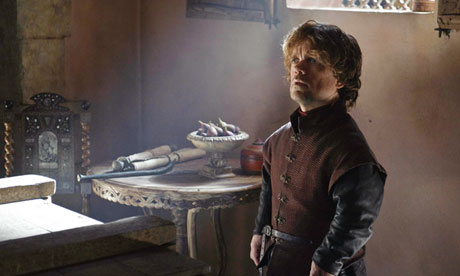
Have you been watching ... Game of Thrones?

The headline of the article is "Have you been Watching...Game of Thrones?". The author of the article is Sarah Hughes The article was published on the web site www.guardian.com on Sunday 26.2013. The article provides the information about the Game of Thrones which first started two years ago, naysayers said it would never work.

In the beginning of the article the author asks this question: "Who would want to watch a fantasy drama featuring squabbling families, dark magic, dragons and something very nasty lurking beyond a wall? The answer, it turns out, is rather a lot of people."

Then she states ts ratings are rising week upon week – it's Sky Atlantic's biggest show, and averages over five million viewers in the US – while the number of people watching illegally has grown so high, with up to four million viewers downloading each episode, that the US Ambassador to Australia recently begged Australian viewers to "stop the game of clones".

In fact the author states yet, for all the intimacy, Game of Thrones never loses its epic sweep. Whether two combatants finding love on the edge of the world or a young warrior queen freeing an army of slaves and convincing them to fight for her, this series has been filled with cinematic moments to make you gasp and swoon.

Further Sarah reports that In the first two seasons, there was a slight sense that they were constrained by the subject matter, worried of alienating loyal book fans. This time, there's a freedom to their storytelling, and a sense that they're prepared to take risks.

Then the author states that collision between the fantastical and the emotionally real is the reason behind Game of Thrones' growing success. Yes, this is a world where anything can (and probably will) happen, but it's propelled forward by the accuracy of its feelings. We watch not simply to see dragons fly, wondrous as they are, but because we believe in these characters, their fights, their dreams, their loves, their loss. "If you think this has a happy ending, you've not been paying attention," remarked Theon's nameless torturer in episode six. He may well be right, but the great joy of Game of Thrones is the way it keeps us hoping against all hope.

In my opinion it is worth seeing by many people. All in all, who would want to watch a fantasy drama featuring squabbling families, dark magic, dragons and something very nasty lurking beyond a wall? Now you know the answer.